















Can a Laser Engraver Cut Wood?
Most, but not all, laser engraving machines can cut wood. Even a laser machine that's marketed strictly as an "engraver" can usually pull double duty as a wood cutter, but your success will vary heavily depending on the machine's true specifications and setup. That's because a laser needs adequate optical output power and the correct laser type to cut wood quickly and cleanly, rather than just scorching the surface.
So if your goal is to find a laser engraver that can also cut wood, you need to know exactly which features and specifications to look for.
 Laser Cutting Wood vs. Laser Engraving Wood: Why it Matters
It helps to understand the basic difference between engraving and cutting when you are shopping for a laser engraver for wood.
- Engraving only removes a thin layer of surface material to create a mark or pattern, so it can tolerate lower power and faster speeds.
- Cutting has to burn all the way through the material in a single pass or several passes, which demands significantly more power, a slower feed rate, and better fume/smoke management.
So, a machine that engraves wood beautifully isn't automatically capable of cutting it, and that is the point where most new buyers usually get confused.
Which Laser Engravers Are the Best for Cutting Wood?
1. CO2 lasers (Best For Prosumers/Professionals)
CO2 laser engraving machines are the gold standard for cutting organic materials like wood and acrylic. A CO2 laser produces an infrared beam at a 10.6-micron wavelength, which organic materials like wood absorb very efficiently, making it quick and effective for cutting. This is, in fact, the main reason CO2 machines outperform diodes on cutting tasks, watt for watt.
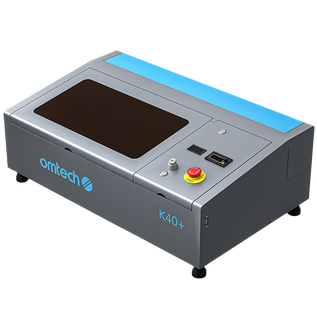
Even an entry-level 40W CO2 laser (like an OMTech K40 or Glowforge) cuts 1/4" wood much more cleanly and quickly than a hobby diode.

2. Diode lasers ( Best Wood Laser Engravers For Hobbyists)
Diode laser engravers are perfect for engraving, but the more powerful models can also cut thinner woods. Diode lasers emit a blue light wavelength (typically around 450nm) that wood doesn't absorb as efficiently as it absorbs CO2 laser light, which is part of why diode lasers need more raw power and more passes to achieve a clean cut.
To cut thin wood (like 1/8" or 3mm Baltic birch), you need a true optical output of at least 10W to 20W. One thing to be careful with is marketing tricks: cheap machines often advertise "40W input power" but only deliver 5W of actual laser output, which will just char the wood rather than cut through it.
What about Fiber Laser Engravers?
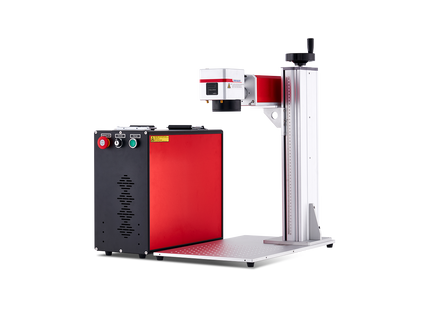
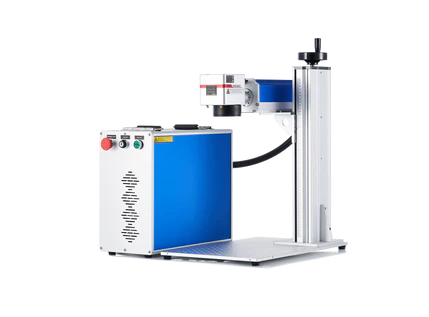
Fiber laser engravers cannot cut or engrave wood. Their light wavelength passes right through organic materials instead of being absorbed, which makes them a major fire hazard if you try; the beam can reflect or pass through the workpiece and strike something behind it.
Cutting Wood with a Laser Engraver: Important Rules of Thumb
| Material Thickness | Recommended Power | Notes |
| 1/16" to 1/8" (1.5mm–3mm) | 10W+ Diode or CO2 | Cuts easily in 1–2 passes; great for bookmarks and ornaments. |
| 1/4" (6mm) | 20W+ Diode / 40W+ CO2 | The practical limit for most hobby lasers; a diode will require multiple passes. |
| 1/2" to 3/4" (12mm–20mm) | 80W–150W CO2 | An extreme fire hazard for low-power units; better suited to a CNC router. |
As a general rule, doubling the material thickness doesn't just double the required power; it also increases the risk of scorching, since the laser spends more time in the same spot to cut all the way through. That's why thicker cuts are typically done in multiple lighter passes rather than one slow, high-power pass.
Choosing a Laser Engraver for Wood Cutting: Crucial Upgrades You'll Need
There are two vital features to look for when choosing a laser engraver for wood cutting: air assist and enclosure/ventilation. These two are non-negotiable, whether you choose a diode laser engraver or a CO2 laser engraver. Here's why:
1. Air Assist: Why You Need It for Laser Wood Cutting
This is a compressor that blows a steady stream of air right at the cut point. Without it, the wood can catch fire, smoke will coat and damage your lens, and your edges will end up deeply charred black. Most air assist systems use a small nozzle mounted around or beside the laser head, so the airflow is concentrated exactly where the beam is cutting rather than blown across the whole bed.
2. Enclosure and ventilation: A Must-Have For Laser Wood Cutting
Wood cutting generates a large amount of thick, lingering smoke. You must vent it out a window or use an inline duct fan to avoid filling your living space with smoke. Beyond comfort, this matters for health. Wood smoke and the fumes released from glues in engineered wood products contain fine particulates and volatile compounds that shouldn't be breathed in regularly.

Best and Worst Woods for Laser Cutting
1. Best Woods For Laser Cutting
The best woods for laser cutting are generally Baltic birch plywood and basswood. These two are the most popular choices in the laser engraving community because they're affordable, uniform, and cut consistently. Solid hardwoods like cherry and maple are also close favorites for both engraving and cutting.
2. Worst Woods For Laser Cutting
The worst woods for laser cutting, on the other hand, are usually generic construction plywood from big-box stores. These use heavy, laser-resistant glues and often contain hidden air pockets or knots that can stop the laser beam entirely, leaving an incomplete cut partway through the material. MDF also generates highly toxic smoke and a sticky residue that can gum up your lens and honeycomb bed.
One material worth calling out specifically: never laser-cut pressure-treated or chemically treated lumber. The chemicals used to treat outdoor wood (often copper- or arsenic-based compounds) release toxic fumes when burned by a laser, and this applies even with good ventilation. Reclaimed or "found" wood should also be inspected carefully, since old paint, varnish, or embedded metal fasteners can be hazardous or damage your machine.
 How to Choose a Laser Engraver for Cutting Wood
Choosing the right laser machine for cutting wood comes down to three factors: your budget, the thickness of wood you plan to cut, and your workspace ventilation. Here is some important shopping advice: look past the generic term "laser engraver" and focus strictly on the machine's true optical output wattage and laser type. These are the two specs that will dictate your actual cutting capability.
Step 1: Pick Your Laser Type Based on Wood Thickness
As we discussed earlier, different laser technologies handle wood differently:
-
20W to 40W diode lasers (best for hobbyists and thin projects)
Great for cutting 1/8" (3mm) to 1/4" (6mm) wood, like basswood and Baltic birch plywood. They're relatively compact and highly affordable. However, you will have a hard time cutting thicker woods. It will require multiple passes, which slow your workflow and increase edge charring.
-
40W to 85W+ CO2 lasers (best for small businesses and clean cuts)
Excellent for cleanly cutting 1/4" (6mm) to 1/2" (12mm) wood in a single, fast pass. Wood absorbs the light wavelength of a CO2 laser much more efficiently than it absorbs a diode's wavelength, resulting in significantly fewer burn marks and faster production times.
A note on fiber/infrared Laser Engravers
I feel compelled to repeat this because we at OMTech see customers make this mistake all the time: avoid machines using primarily fiber or 1064nm infrared lasers if your goal is cutting wood. These wavelengths are designed for metal and plastic, and they'll pass right through or fail to properly cut the wood.
Step 2: Compare Key Non-Negotiable Features
To successfully cut wood without ruining your material (or starting a fire), make sure your machine includes or supports these upgrades:
- Air assist pump: Again, this is an absolute requirement for cutting. It blows smoke away from the laser beam, prevents edge charring, and keeps the wood from flaring into an open flame. This is a point that we at OMTech always hammer home.
- Honeycomb working bed: Never cut wood directly on a solid metal tray or table; look for a machine that has a honeycomb bed. Why is a honeycomb bed important in wood laser cutting? It lifts the wood and allows laser smoke to escape underneath. This prevents messy smoke stains on the back of your workpiece and reduces the beam reflecting up into the cut.
- LightBurn compatibility: Avoid machines locked into restrictive, proprietary software. LightBurn Software is the industry standard for laser cutting and gives you precise control over power, speed, and multi-pass cutting layer settings.
Recommended Laser Wood Cutting Machines: Best Models by Tier
| Model | Laser Type | Best For | Standout Features |
| Ortur Laser Master 3 | 20W Diode | Budget-focused beginners cutting 1/8" to 1/4" wood. | Open-frame, easy to modify, solid LightBurn integration. |
| xTool S1 or F1 Ultra | 20W–40W Diode | Crafters and home workshops prioritizing safety. | Fully enclosed, eye-safe design, beginner-friendly software, and swappable modules. |
| OMTech K40 | 45W Diode / CO2 | Batch production and clean cuts on 1/4" sheets. | Auto-lifting enclosure, built-in camera for quick material alignment, excellent value for a desktop unit. |
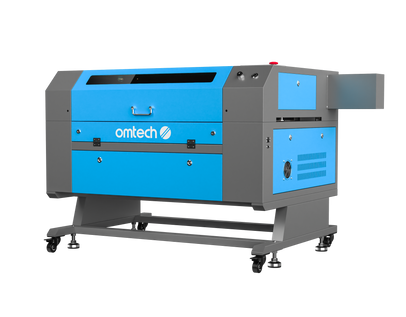
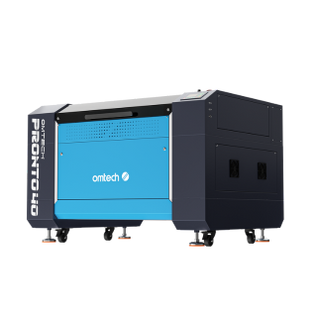
| OMTech Polar/Pronto | 55W–80W CO2 | Professional small businesses cutting thick wood and acrylic. | Massive pass-through bed, automatic conveyor feed options, dual camera array. |
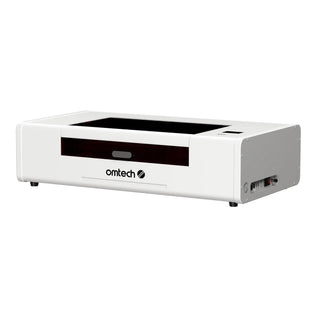
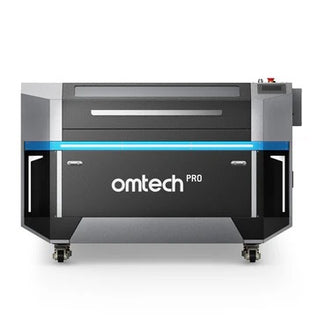
When it comes to laser engravers for wood cutting, OMTech offers the widest variety of capable wood-cutting CO2 laser engravers. From small affordable desktop models like the K40 (40W) to commercial and industrial models like the OMTech Pronto 150W laser engraver and cutter.
Step 3: Plan Your Workspace Safety
Cutting wood produces incredibly dense, foul-smelling smoke. If you plan to use an open-frame diode laser, you'll need to purchase a separate zip-up fabric enclosure to trap the fumes. For both open and enclosed machines, you'll also need a flexible duct pipe combined with an inline exhaust fan to actively push the smoke out through a nearby window.
It's also worth keeping a fire extinguisher rated for the materials you're cutting within arm's reach and never leaving a laser unattended mid-cut. Wood cutting is one of the more fire-prone laser applications precisely because the material itself is combustible.
OMTech OMTech Pronto 35: Best High-Performance Laser Engraver for Wood Cutting
The OMTech Pronto 35 60W is well suited to serious woodworking because it balances cutting power, workspace, speed, and automation. It has enough power to cut plywood, MDF, basswood, and moderate-thickness hardwoods commonly used in laser projects, while offering a spacious work area and productivity features that benefit both hobbyists and commercial shops.

It uses a 60W glass CO2 laser tube, providing noticeably more cutting power than typical 40W–50W desktop lasers. That additional power enables cutting thicker wood in fewer passes, faster cutting speeds, cleaner edge quality, reduced charring, and higher production throughput.
OMTech Pronto 35 Wood Cutting Performance Chart
| Material | Typical Cutting Capacity |
| Basswood | 8–12 mm in one pass |
| Poplar plywood | 8–10 mm |
| Birch plywood | 6–8 mm cleanly |
| MDF | 6–9 mm |
| Oak | 4–6 mm |
| Maple | 4–6 mm |
| Walnut | 4–6 mm |
| Veneer | Excellent |
| Balsa | Excellent |
If you're a maker, Etsy seller, sign shop, educational lab, or small manufacturing business, it represents an excellent balance of performance, versatility, and value.
Final Thoughts
Whether a laser engraver can cut wood ultimately comes down to matching optical output, laser type, and safety features to the thickness and type of wood you're working with. A hobby diode laser can handle thin plywood and basswood projects just fine, but anything thicker, or any project meant for production volume, calls for a CO2 machine with proper air assist, ventilation, and a honeycomb bed. Getting these fundamentals right from the start will save you far more time and far more scorched material than trying to push an underpowered machine past its limits.
You may also be interested in all the secrets of personalized wood cutting, and some ideas you could easily start with.