














How Laser Engraving Is Used in Medical Device Traceability
I once watched an orthopaedic surgeon pause mid-procedure to check the serial number on a bone plate. The implant had already been through multiple sterilisation cycles that week. He lifted it under the theatre light, tilted it slightly, and read the data matrix code directly off the surface.
The mark was still perfectly legible.

That’s the real requirement in medical device marking — not how it looks in a brochure, but whether it’s still readable in a sterile field years after production.
Every medical device that comes into contact with a patient — whether implanted, reusable, or single-use — requires a permanent, machine-readable identifier.
Labels peel.
Ink fades.
Adhesives introduce contamination risk.

Laser marking is the only method that consistently produces identifiers that survive the full lifecycle of a medical device — from manufacturing and sterilisation through to surgical use and, in some cases, decades inside the human body.
This guide explains how laser marking is used in medical device manufacturing in Australia — including the regulatory requirements under the Therapeutic Goods Administration (TGA), the marking processes suited to different materials, and the laser systems that deliver the quality, durability, and biocompatibility required under ISO 13485.
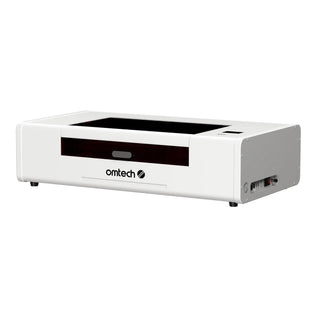
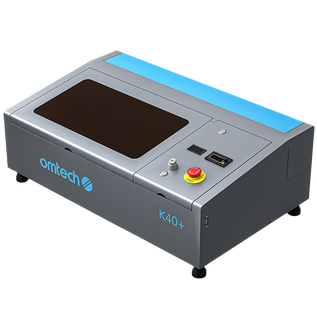
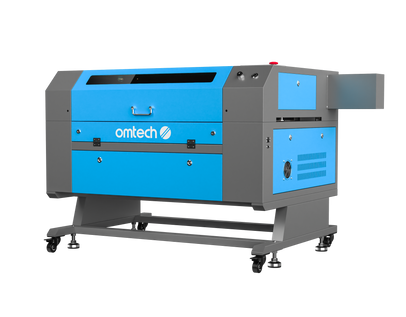
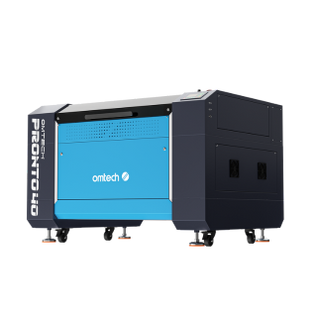
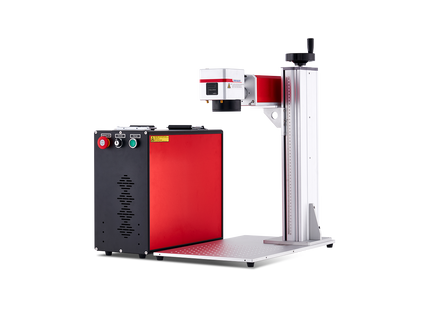
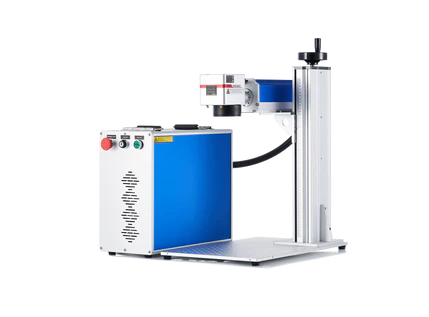
OMTech fibre laser engraving machines and MOPA systems are used by contract manufacturers and medical suppliers to produce compliant, sterilisation-resistant marks on stainless steel, titanium, and medical-grade alloys.

Why Laser Marking Is Mandatory in Medical Device Manufacturing
In Australia, medical devices must comply with the Unique Device Identification (UDI) framework administered by the Therapeutic Goods Administration.
Like the U.S. system, UDI requires each device to carry a permanent, machine-readable code linking it to:
- Manufacturer
- Device model
- Batch/lot number
- Serial number
- Expiry date (if applicable)
For reusable devices — such as surgical instruments, implants, and endoscopes — the identifier must be marked directly on the device, not just on packaging.
This is where traditional marking methods fail.
- Labels do not survive autoclaving
- Ink markings degrade with sterilisation
- Adhesives introduce contamination risks
Laser marking is often the only viable method for achieving the permanence, precision, and biocompatibility required for Class II and Class III medical devices under Australian regulatory frameworks aligned with ISO 13485.

REAL MANUFACTURING CONTEXT
A contract manufacturer in New South Wales producing stainless steel surgical instruments switched from inkjet marking to laser annealing after repeated audit findings related to mark degradation post-sterilisation. Ink-based codes faded after repeated autoclave cycles.
After implementing a MOPA fibre laser system and validating the process under ISO 13485, the manufacturer passed subsequent audits with no non-conformities related to device marking. The quality team identified laser marking as the single most impactful upgrade in their compliance process.
The Four Laser Marking Processes Used on Medical Devices
Medical device marking is not a single method — it involves four distinct processes. Choosing the wrong one can compromise corrosion resistance, create contamination risks, or fail sterilisation testing.
Laser Annealing
Process: Subsurface chemical change (no material removal)
Sterilisation Resistance: Excellent
The standard method for stainless steel and titanium instruments.
- Creates a dark oxide layer
- Preserves passivation
- No surface roughness change
- No contamination risk
This is the preferred UDI marking method for reusable surgical instruments under ISO 13485.
Laser Ablation
Process: Removes coating or surface layer
Sterilisation Resistance: High
Used for:
- Anodised aluminium
- PEEK implants
- Coated polymers
Produces high-contrast marks by exposing underlying material.
Laser Etching
Process: Slight surface melting
Sterilisation Resistance: Moderate
- Fast marking
- Light surface texture
Suitable for non-critical components, but not recommended for implant surfaces where fluid interaction matters.
Laser Engraving
Process: Deep material removal (0.05–0.5mm+)
Sterilisation Resistance: Excellent
Used for:
- Orthopaedic implants
- High-wear components
Deep engraving can trap debris — careful design validation is required for implantable devices.
Laser Types for Medical Device Marking
Fibre Laser — Industry Standard for Metals
1,064nm fibre lasers are ideal for:
- Stainless steel
- Titanium
- Cobalt-chrome
Used for etching and annealing across most surgical instruments.
MOPA Fibre Laser — Critical for Stainless Steel
MOPA systems allow pulse duration control, enabling true annealing without damaging the passive layer that protects against corrosion.
This is essential for:
- Class II and III devices
- Reusable surgical tools
- Long-term implant applications
UV Laser — Plastics and Polymers
UV lasers use photochemical marking (“cold marking”), ideal for:
- PEEK implants
- Medical tubing
- Polycarbonate components
No thermal damage, making them suitable for heat-sensitive materials.
What UDI Compliance Requires
A UDI includes:
- Device Identifier (DI) — identifies model/version
- Production Identifier (PI) — includes batch, serial, dates
These must be marked in both:
- Machine-readable format (e.g. Data Matrix)
- Human-readable text
Key formats:
- 2D Data Matrix codes — preferred for small devices
- Linear barcodes — for larger items/packaging
- Serial numbers — typically ≥1.5mm height
- Batch numbers — required for traceability
COMPLIANCE NOTE: VALIDATION IS THE MANUFACTURER’S RESPONSIBILITY
Regulators including the Therapeutic Goods Administration require that manufacturers — not equipment suppliers — validate marking processes.
This means:
- Testing mark durability after sterilisation
- Verifying readability over lifecycle
- Revalidating after any process change
This is why many facilities continue using older, validated systems — consistency matters more than upgrades.
OMTech Machines for Medical Device Marking
Medical manufacturers in Australia typically use OMTech fibre and MOPA systems for precision and compliance.
Galvo Fibre 20–50W
- High-speed marking (up to 10,000 mm/s)
- Ideal for serial numbers and barcodes
- Used for surgical instruments and components
MOPA 60W Fibre
- True annealing for stainless steel
- No passivation damage
- Autoclave-resistant marks
Best suited for reusable medical devices requiring strict compliance.
100W MOPA Fibre
- High-resolution marking on titanium
- Suitable for implants and small components
- Handles tight marking areas with high contrast
SETUP & VALIDATION SUPPORT
OMTech provides professional setup and parameter calibration.
Final process validation remains the responsibility of the manufacturer under ISO 13485.
Frequently Asked Questions
What is laser marking in medical devices?
A process using a laser to permanently mark identifiers (UDI, serial numbers, barcodes) directly onto medical devices without inks or chemicals.
Why is laser marking required in Australia?
UDI regulations under the Therapeutic Goods Administration require permanent, traceable identifiers on most medical devices.
What’s the difference between annealing and etching?
Annealing creates a subsurface mark without damaging the material. Etching modifies the surface and may affect corrosion resistance.
What laser is best for stainless steel instruments?
A MOPA fibre laser — it enables annealing without damaging passivation layers.
Can laser marks survive sterilisation?
Yes. Properly applied laser marks (especially annealed marks) withstand repeated autoclave cycles without degradation.
What materials can be laser marked?
- Stainless steel
- Titanium
- Cobalt-chrome
- PEEK
- Medical polymers
How small can UDI marks be?
Data Matrix codes as small as ~3mm × 3mm can be used, depending on validation and scanning requirements.
How does ISO 13485 relate to laser marking?
It requires manufacturers to validate and control marking processes to ensure consistent quality, traceability, and compliance.