












Laser Engravers for Australian Small Business
Walk into a maker’s shed in regional Queensland or a shared studio in Melbourne’s inner north and you’ll notice the same shift: the laser is no longer a hobby curiosity. It is a production tool for Australian small business, turning native timber, acrylic and leather into wedding signage, corporate gifts and market-ready stock. The appeal is straightforward — local buyers pay a premium for designs cut and engraved nearby, without the wait or freight footprint of an overseas order.

But buying a laser for a business in Australia is not the same decision it was even two years ago. The entry price has dropped, the market is crowded with imported machines, and the compliance questions are real. This guide is written for someone standing at that decision point: you have a product idea, a spare room or shed, and a budget in AUD. Here is what actually matters before you commit.
What small business looks like in the AU laser market
The Australian laser scene has two distinct starting points, and they need different machines.
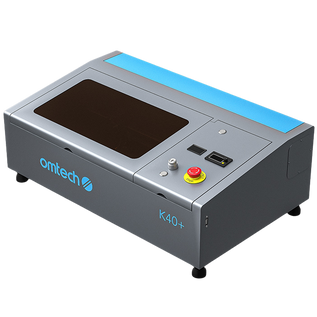
The first is the side-hustle setup: a K40-class or compact 40–55 W CO2 laser, often in a garage, spare room or shared maker space. The work is personalised gifts, cake toppers, small acrylic signs and engraved tumblers. The operator is learning materials, software and pricing at the same time. Cash flow is real but modest — some Australian laser shops publicly share monthly revenue in the A$2,500–A$8,000 range, which means the machine has to earn its keep early.
The second is the established workshop: a 60–100 W CO2 or fibre laser in a dedicated space, producing signage for local businesses, awards for sporting clubs, and wholesale blanks for other makers. In regional Queensland, for example, design studios have built rural businesses on trophies for local footy teams, branded cheese boards and wedding signage — products that previously had to be ordered from the city or accepted as mass-produced.
If you are in the first group, a sub-A$1,000 machine is not a compromise; it is the correct entry point. If you are in the second, the machine specification matters less than tube life, bed size consistency and support, because downtime is lost revenue.
What you will actually spend in AUD, including GST
Australian prices for laser engravers are almost always quoted including GST at the consumer and retail level. GST is 10%, and if your business is registered for GST, you generally claim the GST component back as a credit on business purchases. That means the real cost to a GST-registered business is the GST-exclusive portion — but your cash outlay at purchase is the inclusive price.
The table below is a public-market reference range, not a quote. Actual pricing changes with model year, accessories and supplier. Treat every figure as a starting point and confirm current pricing before purchase.
| Tier | Typical AUD range, incl. GST, reference only | What it buys | Best fit |
|---|---|---|---|
| Entry and side-hustle CO2 | Approx. A$900–A$1,500 | 40–45 W desktop CO2, small bed, basic exhaust, entry software | First paid jobs, gifts, cake toppers, small acrylic pieces |
| Serious desktop CO2 | Approx. A$2,500–A$4,500 | 50–60 W enclosed CO2, larger bed, improved motion system, better fume control | Regular online orders, wedding signage, small-batch production |
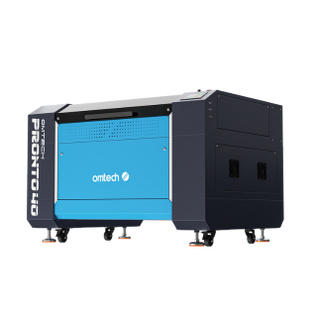
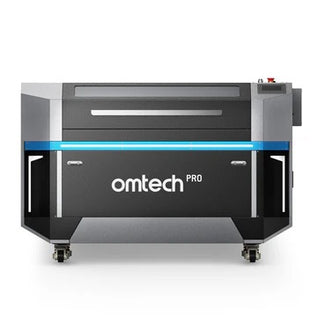
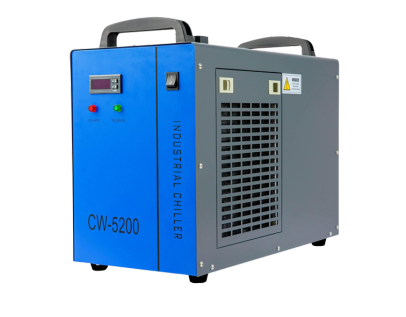
| Production CO2 | Approx. A$5,000–A$9,000+ | 80–100 W CO2, 600 × 1000 mm class bed, chiller, stronger extraction | Signage, awards, wholesale blanks, multi-operator workshop |
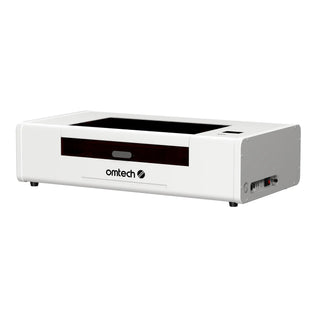
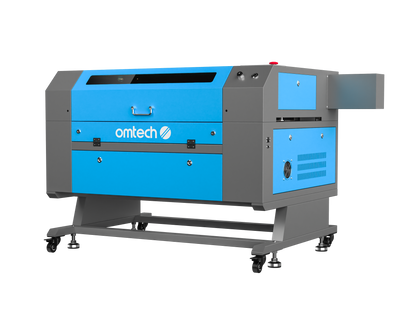
For context, OMTech Australia has published reference points around A$999 for a K40+ entry CO2, A$3,299 starting for a Turbo-535, and approximately A$5,500 for a 100 W Maker-class machine. These are useful anchors, not a price list — always confirm current pricing and inclusion of GST, delivery and installation.
Two costs catch Australian buyers more often than the machine itself:
- Freight to regional areas. If you are outside a capital city, delivery can add hundreds of dollars and extend lead times. Build this into your budget before comparing machine prices.
- Ventilation and fume extraction. A laser that vents into a closed shed is not a business asset; it is a liability. An air purifier or external extraction setup is part of the true startup cost, not an optional upgrade.

Safety and compliance for Australian buyers
Laser safety in Australia is not a single certificate you can tick once. It is a combination of product classification, workplace obligations and operator protection. Three standards come up repeatedly in supplier documentation and WHS guidance.
AS/NZS 2211: product classification and labelling
Class 3B and Class 4 laser products generally need to be classified and labelled in accordance with AS/NZS 2211, which adopts IEC 60825-1. The label tells you the class, the wavelength and the warnings that apply. A machine supplied without a legible, compliant classification label is a red flag, regardless of price.
Class 4 lasers can cause eye and skin damage from direct and diffuse reflection, and they are a fire hazard. WHS regulations in several Australian jurisdictions also restrict the use of Class 3B and Class 4 lasers in building or construction operations — a separate issue from running a laser in a workshop, but one that matters if you plan to take the machine to site.
AS/NZS 1337.5: laser eye protection
Laser safety glasses supplied for adjustment work should conform to AS/NZS 1337.5. Not every pair of tinted safety glasses qualifies. The eyewear must be matched to the wavelength and power of the laser, and the supplier should be able to state the standard and the optical density.
WHS duties and fume control
General WHS duties require a safe workplace, and laser cutting produces fumes, particulates and potentially toxic decomposition products depending on the material. Extraction must be sized for the material and the duration of operation. For a small business, this means a documented safe work procedure, appropriate extraction, and a clear list of materials you will not process.
Choosing the right machine for an Australian workflow
The spec sheet will list watts, bed size and speed. The decision that matters is different: what will you actually make, and what will you refuse to make?
If your product is gifts and small signage
A 40–55 W CO2 with a bed around 300 × 200 mm to 500 × 300 mm covers most personalised gift work. Acrylic cake toppers, timber place cards, engraved cheese boards and small corporate awards fit comfortably. The limitation is throughput: if an order for 200 wedding place cards arrives on Monday, a small bed and a single head will become the bottleneck.
If your product is signage and wholesale
A 600 × 1000 mm bed class machine with 80–100 W gives you the ability to nest multiple signs, cut thicker timber and acrylic, and run jobs unattended for longer. This is where tube life becomes a commercial variable: a tube rated around 10,000–12,000 hours changes the cost-per-hour calculation compared with an entry tube rated around 3,500 hours.
If your product involves metal marking
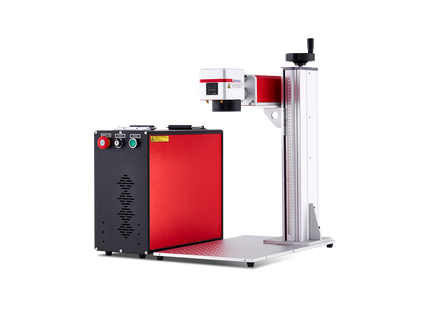
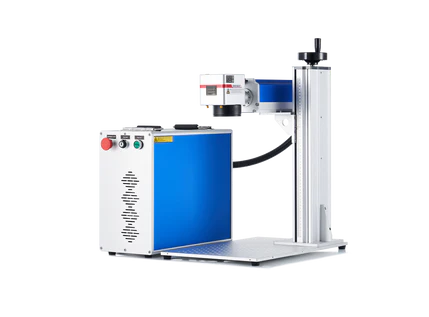
CO2 lasers mark coated metals and some anodised surfaces, but they do not engrave bare stainless steel or aluminium with the depth and contrast of a fibre laser. If metal is central to your product mix, a fibre laser is the correct tool, and the budget moves into a different bracket.
If you are comparing OMTech’s Australian range specifically, the learning centre is the safest starting point for model-level detail; the main Australian site carries current collection pages. Do not rely on a US spec sheet or US-dollar pricing to estimate an Australian machine — the configuration, electrical requirements and included accessories can differ.

GST, ABN and pricing your work
You can start a laser side hustle without registering for GST. The threshold is A$75,000 GST turnover in a rolling 12-month period; once you reach or expect to reach it, you must register within 21 days. Below that threshold, registration is optional. But voluntary registration is not a free lunch: you must charge GST on taxable supplies, lodge activity statements, and keep tax invoices.
For pricing, Australian bespoke laser work commonly sits in the A$60–A$120 per hour range for customer-supplied items, with retail product pricing built on material cost, machine time and design labour. If you are registered for GST, the price your customer sees includes GST; one-eleventh of that price is the GST component you remit. Build your margins on the GST-exclusive revenue, not the headline price.
Where the demand is coming from
Australian laser businesses are not all chasing the same customer. The strongest local demand tends to cluster around four product stories:
- Wedding and event signage. Acrylic welcome signs, timber place names and cake toppers made from native timbers such as Jarrah or Blackwood carry a premium because they are locally made and customisable.
- Community and sporting awards. Local clubs and schools buy trophies, plaques and medals. A laser makes short-run personalisation viable without a trophy-shop minimum order.
- Corporate gifting and small-batch branding. Engraved drinkware, timber desk pieces and branded signage for cafes and clinics.
- Personalised keepsakes. Cattle tags, pet tags, birth-stat boards and memorial pieces — small, high-emotion products that are hard to offshore competitively.
The common thread is not laser-cut products in the abstract. It is local relevance: a product that references a place, a club, a family or a business, and can be made in days rather than weeks.
What to check before you pay a deposit
- Classification label. Is the machine labelled in accordance with AS/NZS 2211, and does the label match the class stated in the manual?
- Eyewear conformity. Does the supplied or recommended eye protection conform to AS/NZS 1337.5 for the relevant wavelength?
- Extraction plan. Does the supplier offer a fume extraction or purification solution sized for your materials and room volume? If not, budget for a third-party unit.
- Electrical configuration. Is the machine supplied with the correct plug and voltage for Australia, and can the supplier provide the relevant electrical compliance documentation for the unit?
- GST-inclusive price and delivery. Is the advertised price inclusive of GST, and what is the delivery cost to your postcode? Regional freight can materially change the landed cost.
- Support and parts. Is there Australian-based support, or at least a documented spare-parts path? A tube or power supply failure with no local support is a business interruption, not a warranty inconvenience.

Ready to compare Australian-ready machines? Start with the OMTech Australia range, then match the bed size and wattage to the product you intend to sell — not the other way around.
Compare Australian laser engraversFrequently asked questions
Do I need GST registration to start a laser engraving business in Australia?
Not immediately, unless your GST turnover reaches A$75,000 in a rolling 12-month period, or A$150,000 for a non-profit. Once you reach or expect to reach the threshold, you must register within 21 days. Below the threshold, registration is optional but brings obligations such as charging GST and lodging activity statements.
Can I use a laser engraver in a residential garage or shed?
Many Australian side-hustles start in a garage or shed, but the space must be assessed for ventilation, fire risk and electrical safety. Laser processing produces fumes and particulates, and Class 4 lasers are a fire hazard. A garage is not automatically suitable; it needs appropriate extraction and a safe work procedure. Confirm local council and state or territory WHS requirements for your specific premises before production.
What laser safety standard applies to Class 4 laser engravers in Australia?
Class 3B and Class 4 laser products generally need to be classified and labelled in accordance with AS/NZS 2211. WHS regulations in several jurisdictions also restrict their use in building and construction operations. Laser eye protection for adjustment work should conform to AS/NZS 1337.5.
Is a CO2 or fibre laser better for an Australian small business?
CO2 is the versatile choice for timber, acrylic, leather, glass and coated metals. Fibre is the correct tool if bare metal marking or engraving is central to your product. Many Australian workshops start with CO2 and add fibre later when metal work becomes a paid service.
How much can an Australian laser side-hustle earn?
Publicly shared ranges for Australian laser shops sit around A$2,500–A$8,000 per month in revenue, with bespoke service work commonly charged at A$60–A$120 per hour. Revenue is not profit: material, machine time, design labour, GST and platform fees all come out before margin.
If you are ready to shortlist a machine, start with the OMTech Australia range and compare bed size, wattage and extraction requirements against the products you actually plan to sell.