










Thinking About Buying a Laser Etching Machine? Read This First
If you've been researching laser marking equipment, you've probably come across the terms laser etching and laser engraving.
They're often used interchangeably, but they're not exactly the same.
Understanding the difference can help you choose the right machine for your workshop, whether you're producing personalised products, industrial parts, mining equipment labels or promotional merchandise.
In Australia, businesses across manufacturing, engineering, mining, hospitality and custom fabrication are increasingly using fibre laser technology to create permanent, professional-quality markings on metal components.
Here's what you need to know before investing in a laser etching machine.

Laser Etching vs Laser Engraving: What's the Difference?
Both processes use a laser beam to create permanent markings, but they produce different results.
Laser Etching
Laser etching heats the surface of the material until it melts slightly.
The surface expands, creating a shallow mark that can often be felt with your fingertip.
Laser etching is:
- Fast
- Precise
- Permanent
- Ideal for high-volume production
It's commonly used for:
- Serial numbers
- Logos
- QR codes
- Data Matrix codes
- Product identification
- Asset tracking
Laser Engraving
Laser engraving removes material from the surface, creating a deeper recess.
Because more material is removed, engraving generally takes longer than etching but produces a deeper, more durable mark.
Laser engraving is often chosen for:
- Industrial tools
- Moulds
- Jewellery
- Premium branding
- Deep identification marks
Neither method is better than the other—it simply depends on the application.

Why Fibre Lasers Are Ideal for Metal
For marking metal, fibre lasers are the industry standard.
Their wavelength is highly effective on metals such as:
- Stainless steel
- Aluminium
- Brass
- Copper
- Titanium
- Mild steel
- Coated metals
Unlike CO₂ lasers, fibre lasers don't require marking sprays or chemical treatments for most metal applications.
The result is a clean, permanent mark that resists heat, abrasion, moisture and chemicals.
For Australian manufacturers working in demanding environments—including mining, construction and food processing—this durability is a major advantage.
Laser Etching on Stainless Steel
Stainless steel is one of the most popular materials for fibre laser marking.
Typical applications include:
- Kitchen equipment
- Medical instruments
- Industrial machinery
- Automotive components
- Identification plates
- Food processing equipment
A fibre laser produces crisp black or dark grey markings directly on the surface without damaging the integrity of the metal.
Because the marking becomes part of the material itself, it won't peel, fade or wash away over time.
This makes fibre laser etching ideal for businesses requiring long-term product traceability.
Why Data Matrix and QR Codes Matter
Many Australian manufacturers now use laser marking to create permanent identification codes.
These include:
- QR codes
- Data Matrix (2D) codes
- Serial numbers
- Batch numbers
- Part identification
Unlike labels or stickers, laser-marked codes remain readable even after years of use in harsh environments.
Industries that commonly use laser-coded components include:
- Manufacturing
- Mining
- Defence
- Aerospace
- Medical devices
- Engineering
As traceability requirements continue to increase, fibre laser marking has become an important part of modern production.
Choosing the Right Fibre Laser Power
The right laser power depends on your workload.
20W Fibre Laser
Suitable for:
- Small workshops
- Personalised products
- Jewellery
- Light industrial marking
- Aluminium and stainless steel
30W Fibre Laser
A popular choice for businesses producing regular commercial work.
Benefits include:
- Faster cycle times
- Better performance on harder metals
- Higher daily productivity
50W Fibre Laser
Designed for:
- High-volume production
- Deep engraving
- Tough alloys
- Industrial manufacturing
For many Australian small businesses, a 20W or 30W fibre laser provides an excellent balance between capability and affordability.
Standard Fibre vs MOPA Fibre
Not all fibre lasers work exactly the same way.
Standard Fibre Lasers
Perfect for:
- Logos
- Serial numbers
- Identification plates
- Industrial marking
- General manufacturing
MOPA Fibre Lasers
MOPA technology offers greater control over pulse width, allowing users to produce:
- Different shades on metal
- High-contrast markings
- Colour marking on stainless steel
- More refined finishes
If appearance is just as important as permanence, a MOPA fibre laser may be worth considering.
What Materials Can Fibre Lasers Mark?
Although stainless steel is the most common application, fibre lasers can also mark:
- Aluminium
- Brass
- Copper
- Titanium
- Gold
- Silver
- Coated metals
- Anodised aluminium
However, fibre lasers are not designed for materials such as:
- Wood
- Acrylic
- Leather
- Cardboard
- Fabric
For those materials, a CO₂ laser is usually the better option.
Businesses working with both metals and organic materials may benefit from owning both laser types, depending on their production needs.
Accessories That Improve Productivity
Several accessories can make metal marking faster and more versatile.
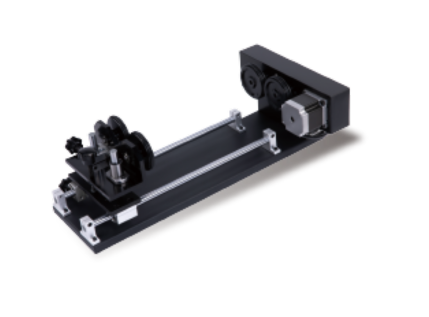
Rotary Attachment
Perfect for engraving cylindrical products such as:
- Drink bottles
- Pipes
- Rings
- Tools
- Tumblers
Laser Software
Many OMTech fibre laser systems are compatible with EZCAD2, while selected models also support LightBurn.
Modern software allows users to:
- Import artwork
- Generate QR codes
- Create serial numbers
- Batch process jobs
- Adjust laser settings quickly
Good software saves time and improves consistency.
Why Australian Businesses Choose Fibre Laser Technology
Across Australia, fibre lasers are becoming increasingly popular with:
- Engineering workshops
- Manufacturing businesses
- Metal fabricators
- Promotional product companies
- Jewellery makers
- Automotive suppliers
- Mining equipment manufacturers
Businesses appreciate fibre lasers because they offer:
- Fast production
- Low maintenance
- Air-cooled operation
- Long service life
- Permanent markings
- Excellent precision
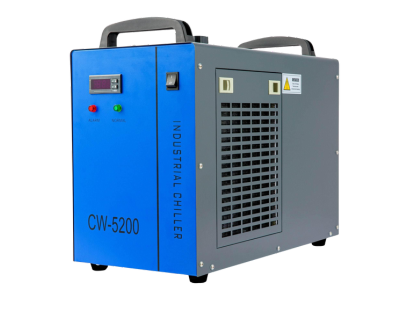
Unlike many CO₂ systems, most fibre laser marking machines do not require an external water chiller, making installation simpler and reducing maintenance.
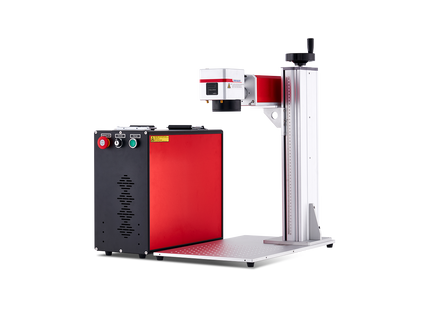
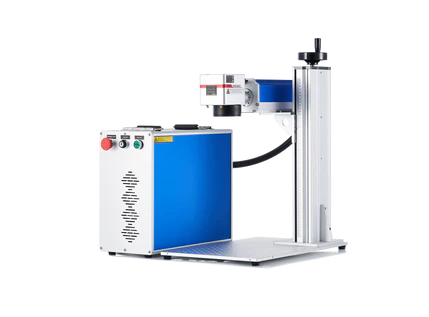
Why OMTech Fibre Lasers Are Built for Business
OMTech fibre laser machines are designed to deliver reliable performance for both growing businesses and established manufacturers.
Whether you're producing industrial identification plates, personalised products, promotional merchandise or precision-engineered components, OMTech offers solutions that combine:
- High-speed marking
- Autofocus technology
- User-friendly software
- Reliable performance
- Multiple power options
With models ranging from compact entry-level systems to higher-powered production machines, businesses can choose equipment that matches their workload and future growth.
Laser etching and laser engraving are closely related, but they serve different purposes.
If your goal is fast, permanent marking on stainless steel, aluminium or other metals, laser etching with a fibre laser is often the ideal solution.
If deeper marks are required, laser engraving may be the better choice.
The best investment isn't simply the most powerful machine—it's the one that matches your materials, production volume and business goals.
For Australian workshops looking to improve efficiency while producing durable, professional-quality metal markings, a fibre laser can be one of the most valuable additions to the business.