











Everything You Need to Know About UV Printing
From custom signage and promotional products to packaging prototypes and personalised gifts, UV printing has become one of the fastest-growing digital printing technologies available today. Its ability to print directly onto a wide range of materials while delivering vibrant colours, exceptional detail, and long-lasting durability makes it a valuable solution for businesses looking to expand their product offerings.
Whether you're a sign maker, product customiser, print shop owner, or creative entrepreneur, understanding how UV printing works can help you identify new revenue opportunities and improve production efficiency.
In this guide, we'll explain what UV printing is, how it works, what materials it can print on, and why more Australian businesses are investing in UV printing technology.
What Is UV Printing?
UV printing is a digital printing process that uses ultraviolet (UV) light to instantly cure specially formulated inks as they are printed onto a surface.
Unlike traditional inks that dry through absorption or evaporation, UV inks harden immediately when exposed to UV light. This instant curing process allows the ink to sit on the surface rather than soaking into the material, resulting in:
- Rich, vibrant colours
- Sharp text and fine detail
- Excellent durability
- Fast production speeds
- Minimal post-processing
Because UV printing doesn't rely on material absorption, it can print directly onto many surfaces that conventional printers cannot handle, including acrylic, glass, wood, plastics, metal, ceramics, leather, and more.
This versatility has made UV printing a popular choice for signage, product personalisation, industrial labelling, promotional merchandise, and specialty manufacturing.
How Does UV Printing Work?
UV printing combines precision inkjet technology with UV-LED curing systems to create high-quality, production-ready prints.
Step 1: Ink Application
The printer deposits microscopic droplets of UV-curable ink onto the material using high-precision printheads.
Most UV printers support:
- CMYK colours
- White ink
- Clear varnish layers
This enables vibrant colour reproduction on both light and dark surfaces while also supporting premium finishing effects.
Step 2: Instant UV Curing
As the ink is applied, UV-LED lamps immediately expose it to ultraviolet light.
This triggers a chemical reaction that instantly hardens the ink.
Because curing occurs almost instantly:
- Colours remain crisp and accurate
- Ink does not spread or bleed
- Prints can be handled immediately
- Production turnaround times are reduced
Step 3: Finished Product Ready for Use
Unlike traditional printing methods, there is no drying period required.
Once printing is complete, products can move directly to packaging, assembly, installation, or shipping.
This streamlined workflow helps businesses improve efficiency and reduce production bottlenecks.
UV Printing vs Traditional Inkjet Printing
Many people wonder whether a standard office or home printer can achieve similar results.
The answer is no.
Traditional inkjet printers are designed primarily for paper-based applications and use water-based inks that rely on absorption.
As a result, they cannot reliably print on:
- Acrylic
- Glass
- Wood
- Plastic products
- Metal surfaces
- Phone cases
- Promotional items
UV printers are specifically engineered to print directly onto these materials while maintaining excellent adhesion and durability.
For businesses producing customised products, signage, or branded merchandise, UV printing opens up opportunities that standard inkjet printers simply cannot offer.
UV Printing vs Sublimation
UV printing and sublimation are both popular customisation technologies, but they serve different purposes.
Sublimation Printing
Best suited for:
- Polyester garments
- Soft signage
- Fabric products
- Coated drinkware
Sublimation uses heat and pressure to transfer dyes into specially coated surfaces.
UV Printing
Best suited for:
- Acrylic signage
- Phone cases
- Awards and trophies
- Promotional products
- Packaging
- Wood décor
- Rigid substrates
UV printing applies ink directly to the surface without requiring heat transfer, making it far more versatile for hard goods and industrial applications.
What Materials Can a UV Printer Print On?
One of the biggest advantages of UV printing is material flexibility.
Acrylic
Acrylic remains one of the most popular materials for UV printing.
Common applications include:
- Business signage
- Retail displays
- Awards and plaques
- Office branding
- Decorative panels
White ink printing and reverse printing techniques can create premium, glass-like visual effects.
Wood
UV printing allows businesses to create customised wooden products without sacrificing natural texture.
Popular products include:
- Rustic signs
- Wall art
- Coasters
- Home décor
- Branded displays
Glass
Glass printing is commonly used for:
- Decorative panels
- Custom mirrors
- Interior design features
- Awards
- Branded glass products
UV printing delivers vibrant colours while maintaining excellent clarity and detail.
Plastics
UV printers are widely used to customise:
- Phone cases
- Electronic housings
- Promotional products
- Industrial components
- Custom packaging
Metal Surfaces
UV printing works particularly well on coated and treated metals, making it ideal for:
- Nameplates
- Equipment labels
- Industrial tags
- Control panels
- Decorative metal artwork
Ceramics
Ceramic tiles and decorative products can be customised with:
- Logos
- Artwork
- Photographs
- Interior décor graphics
Leather and Faux Leather
UV printing is increasingly used for:
- Wallets
- Notebook covers
- Patches
- Promotional gifts
- Fashion accessories
This allows for detailed, full-colour customisation beyond traditional embossing techniques.
What Is Spot UV Printing?
Spot UV is a premium finishing technique that selectively applies clear varnish to specific areas of a design.
Rather than coating the entire surface, spot UV highlights key design elements such as:
- Logos
- Text
- Patterns
- Brand marks
The result is a visually striking contrast between matte and glossy surfaces.
Benefits of Spot UV
- Premium appearance
- Enhanced branding
- Raised texture effects
- Greater visual impact
- Improved perceived product value
Spot UV is commonly used for packaging, luxury labels, business cards, awards, and high-end promotional products.
Is UV Printing Durable?
One of the main reasons businesses choose UV printing is its durability.
UV-cured inks create a robust surface layer that resists:
- Scratching
- Moisture
- Fading
- Everyday handling
For indoor applications, UV prints can maintain their appearance for many years.
Additional varnish layers can further improve durability for products exposed to more demanding environments.
Is UV Printing Waterproof?
Yes.
Once cured, UV inks are highly resistant to water and humidity, making them suitable for products that may encounter moisture during normal use.
However, product performance can vary depending on the substrate and application.
Is UV Printing Environmentally Friendly?
Compared with many traditional solvent-based printing methods, UV printing offers several environmental advantages:
- Low VOC emissions
- Reduced waste
- Energy-efficient LED curing
- No drying solvents required
Because the inks cure instantly, there is less material waste and fewer production resources required.
Is UV Printing Safe?
Modern UV printers are designed with safety in mind and include protective shielding around UV light sources.
When used according to manufacturer guidelines, UV printing is considered safe for commercial production environments.
Proper ventilation and routine maintenance remain important for optimal workplace safety.
Why Businesses Are Investing in UV Printing
UV printing is more than just a printing method—it is a versatile production tool that allows businesses to diversify their offerings and create higher-value products.
Businesses across Australia are using UV printing to produce:
- Custom signage
- Promotional merchandise
- Personalised gifts
- Product packaging
- Industrial labels
- Awards and trophies
- Retail displays
- Branded corporate products
The ability to print directly onto a wide range of materials while maintaining excellent durability and visual quality makes UV printing one of the most flexible technologies available to modern production businesses.
Discover Professional UV Printing with OMTech Spectra
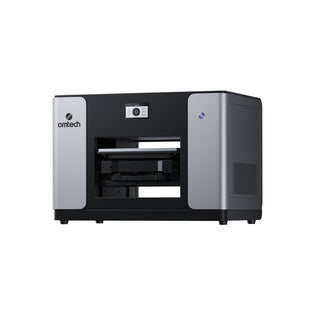
If you're looking to expand your capabilities with professional UV printing, the OMTech Spectra Series offers a powerful combination of performance, versatility, and ease of use.
With high-resolution output, automated maintenance features, white ink support, and compatibility with a wide range of materials, Spectra UV printers help businesses create premium products efficiently and cost-effectively.
Whether you're launching a custom printing business, upgrading your signage operation, or exploring new product opportunities, the OMTech Spectra Series provides the tools to turn creative ideas into profitable products.