













What I Learned Before Choosing a CO2 Laser Engraver
Before I parted with my hard-earned cash, I was confused. Not in a vague, general way. I was specifically frustrated by questions that seemed like they should have dead-simple answers but didn’t.
Why do some 60W machines cost three times more than others? What does "working area" actually mean when you’re trying to shove a real sheet of timber onto the bed? Is a cheap desktop laser machine actually going to run a business, or am I just buying an expensive toy? It took me months of running jobs, ruining sheets of scrap, and speaking with other local cabinet makers to sort through the noise. Here is the unvarnished version that would have saved me thousands of dollars and months of wasted time.

The Diode Deception: Why You’re Thinking Too Small
Let’s be completely honest about diode machines. They are cheap, they are light, and they sit on a small desk. If your grand business plan is limited to burning a tiny logo into a pine coaster or making a few hobbyist test pieces in your garage, a diode is fine.
But if you want to run a genuine commercial business, a diode is a dead end. A diode laser completely struggles with anything reflective, and because of its wavelength, the beam passes straight through clear material. It cannot cut acrylic at all. If you try to cut plywood, the speed is so painfully slow that you’ll watch your profit margins evaporate while waiting for a single job to finish.
A commercial CO₂ laser engraver runs at a completely different infrared wavelength of around 10,600nm. Organic materials, native Australian hardwoods, and soft plastics absorb this thermal energy instantly. Wood burns clean, leather engraves without fraying, and acrylic cuts with a flame-polished edge right off the machine bed. If acrylic fabrication or high-speed timber cutting is anywhere in your business plan, a desktop diode is the wrong tool. Full stop. Do not compromise your business before you even launch; invest in a machine that actually lets you fulfill professional orders.

Material Rules Everything: CO₂ vs. Fiber
I constantly see newcomers asking whether they should buy a CO₂ laser or a fiber laser, treating it like a brand competition. They are entirely different tools built for entirely different industries.
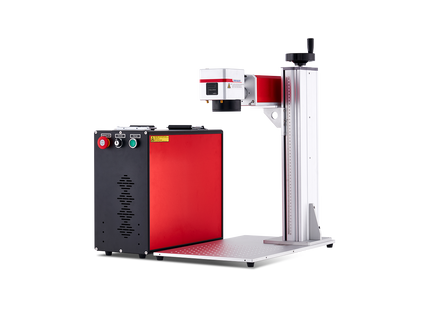
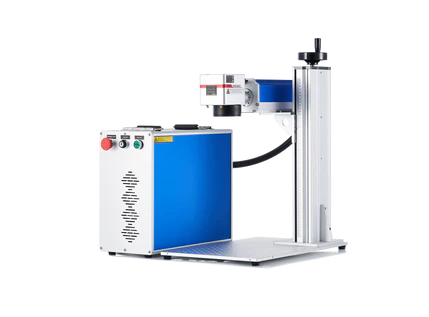
CO₂ is the ultimate multi-material engine for creative businesses. It is built to dominate soft materials like timber, acrylic, leather, fabrics, glass, and rubber. These are the high-margin materials that custom gift businesses, shopfitters, and signage studios work with every single day. Fiber lasers, on the other hand, are engineered strictly for raw metal fabrication—marking stainless steel, aluminum, brass, and titanium. If you aren't running an industrial machine shop marking raw metal parts all day, a fiber laser isn't what you need. Stop worrying about machine specifications for a moment and look at what you are making; your choice of material will immediately tell you that a high-capacity CO₂ cabinet machine is where your business starts.
The Wattage Trap: Why Buying Small is a Costly Mistake
Everyone entering the market over-focuses on wattage, but they view it through the wrong lens. Higher wattage isn’t about getting a "better" engraving; it is about sheer, unadulterated cutting speed and the power to slice through thicker material in a single pass.
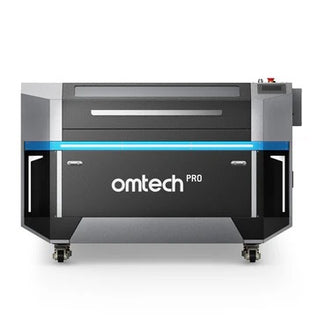
A basic 40W or 50W desktop machine can cut 6mm plywood, but it does so at a snail's pace, forcing you to throttle your production down to a crawl just to ensure the beam keeps up. When you step up to an industrial workhorse like the OMTech 100W or 130W Cabinet Laser, the game changes completely. You are no longer just cutting; you are manufacturing. A 130W tube lets you confidently slice through thick 12mm timber and heavy acrylic sheets in a single, flawless pass without breaking a sweat.
If you are running a real sign business or custom furniture workshop, running a low-wattage machine all day at its absolute limit will kill your efficiency and prematurely degrade your laser tube. Buying a high-wattage machine isn't a luxury; it’s an absolute necessity for commercial throughput.
The Table Size Problem Nobody Warns You About
This is where I completely tripped up during my initial research phase. I looked at machine dimensions on a screen without considering the real-world dimensions of the material I’d be buying from local Australian suppliers.
Standard craft plywood and acrylic sheets come in large, standardized dimensions. If you buy a compact hobby machine with a tiny bed, you will be forced to manually trim down every single piece of material with a circular saw before you can even load it into the laser. That means extra labor, massive material waste, and constant frustration on every single job.
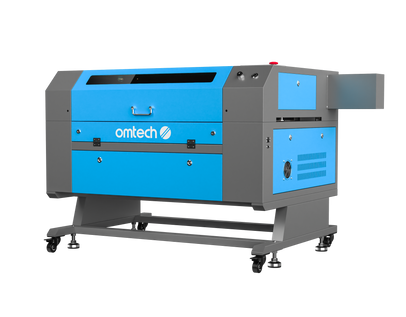
You must match your machine bed to your typical material workflow. A mid-sized footprint like the OMTech 20 x 28 inch (500 x 700mm) Cabinet Laser with Autofocus sits right in that sweet spot for a growing shop. The bed accommodates standard material sheets directly, eliminating the need for constant trimming. If you want to scale even larger and take on massive shop front signage contracts, you should look straight at our large-format production cabinets.
The Reality of Processing Timber on a Commercial Scale
When cutting timber on a production scale, plywood will be the backbone of your inventory. But let's be clear: cheap hardware-store plywood with internal voids and inconsistent structural glue will ruin your day. When the laser beam hits a hidden pocket of industrial adhesive inside cheap ply, the cut will fail to penetrate, leaving you with a ruined, partially cut piece of scrap.
Premium Baltic Birch or high-grade LaserPly is the industry standard for a reason. It features a completely consistent core and even glue distribution, allowing your OMTech machine to cut predictably batch after batch. If you are working with MDF, it cuts beautifully clean and leaves an incredibly smooth edge, but the dust and smoke are genuinely hazardous to breathe. A heavy-duty, high-volume exhaust system is completely mandatory for daily MDF production to maintain a clean workspace and keep your optics safe from heavy tar buildup.
Scaling a Business: Why the "Pronto 60" 130W is the Ultimate Investment
There is a massive, unforgiving gulf between a cheap consumer laser designed for weekend tinkering and an industrial-grade machine built to generate a full-time income. Consumer machines use lightweight frames that drift out of alignment under heavy use, slow down your daily throughput, and offer virtually no technical support when an order is due and something goes wrong.
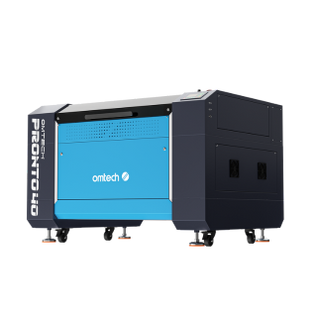
The OMTech Pronto 60 130W CO2 Laser Engraver and Cutter is a machine designed purely for high-volume commercial production. With its massive 130W output and expansive bed, it is engineered to run several hours a day, every day, without skipping a beat. When you are running a business where time is literally money, investing in a robust cabinet system means you can take on commercial contracts with absolute confidence, knowing your hardware can keep up with the demand.
Keeping the Engine Cool for the Long Haul
A CO₂ laser tube is a precision glass instrument that generates immense thermal energy. If you run that tube hot, it will degrade rapidly, causing your cutting power to drop and costing you thousands in premature replacements.
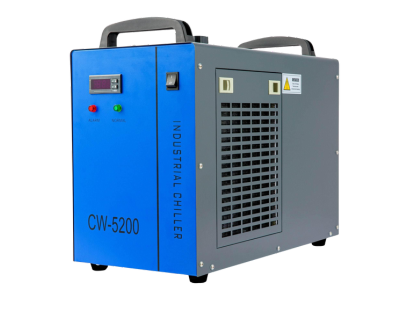
While some hobbyists try to get away with using a basic water pump and a plastic bucket filled with ice, this is an absolute recipe for disaster during a hot Australian summer. A professional shop requires active, dedicated cooling. Budgeting for an industrial refrigeration unit like the OMTech CW-5200 Water Chiller is the smartest way to safeguard your primary investment. By locking your coolant temperature at a precise 18°C, you ensure your high-wattage tube delivers its full operational lifespan, keeping your shop online and manufacturing without unexpected downtime.
 Frequently Asked Questions
Why should a business choose a CO₂ laser over a desktop diode? A professional CO₂ laser handles commercial thicknesses, cuts clear and colored acrylic flawlessly, and operates at speeds that make high-volume production profitable. A diode is structurally limited to light hobby engraving and cannot process clear materials, making it a bottleneck for a serious business.
What is the best wood for a CO₂ laser engraver? High-grade Baltic Birch and certified premium LaserPly yield the most consistent results. They cut cleanly with minimal charring because they lack the hidden internal voids and heavy, inconsistent glues found in basic construction-grade plywood.
What wattage do I need for a small business running daily production? While a 60W machine is fine for light, part-time work, a commercial business should look at 80W to 130W systems. Higher wattage allows you to cut thicker materials in a single pass at much faster speeds, significantly lowering your production time per unit.
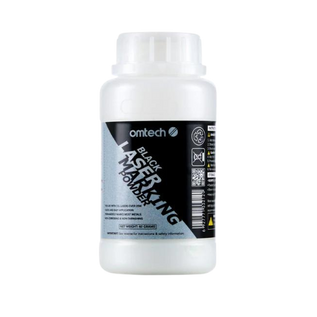
Can an OMTech CO₂ laser cut through metal? Not on its own. The specific infrared wavelength of a CO₂ laser reflects off raw, bare metal surfaces. While you can use a specialized marking spray to create high-contrast black engravings on metal, true structural metal cutting requires moving up to an industrial fiber laser system.
How do I maximize the lifespan of my CO₂ laser tube? The absolute secret to tube longevity is thermal regulation and cleanliness. Never run the machine without an active industrial water chiller like the CW-5200 to keep temperatures stabilized, and ensure you keep your optics free of resin and dust accumulation.