











I Didn't Expect Diode Laser Engravers to Improve This Much
A few years back, diode lasers were what you bought when you couldn't afford anything better. They were small, painfully slow, and fine for burning a rudimentary pattern into cheap pine—but not much else.
That reputation has stuck around in local maker groups longer than it deserves to. The diode machines hitting the Australian market today are a completely different species. We are talking higher wattage, significantly better beam quality, and actual, production-ready processing speeds. Some cleanly slice through craft timber in a single pass; others mark coated metals without needing a single drop of expensive marking spray.
If you dismissed diode engravers a few years ago as glorified toys, it is time for a second look.

What a Diode Laser Engraver Actually Is
To understand why the tech has leaped forward, you have to look at the hardware anatomy.
-
The Core Tech: A semiconductor chip generates the laser beam directly. There is no fragile glass gas tube, and no complex fiber-optic routing. It is simply a compact, solid-state component that draws power in and shoots laser light out.
-
The Shed Appeal: This simplicity is why they are so popular for home garages and small workshops. They are compact, budget-friendly, and require zero water-cooling pumps or chillers. You can unbox one and have it running on your workbench in about twenty minutes.
The massive trade-off used to be raw power. Early hobby-grade diode machines topped out at a measly 5W to 10W of optical output—okay for burning a photo into balsa wood, but useless for serious makers.
Today, the optical output numbers on current diode engravers sit in a much heavier weight class: 20W, 33W, and even 40W true optical output. That extra grunt completely changes the rules of the game.

Where Diode Thrives: Timbers and Soft Materials
A diode laser engraver for wood is where these machines have always made sense, and modern hardware updates have turned them into absolute workhorses for organic materials.
-
Material Versatility: Hoop pine, structural ply, MDF, bamboo, cork, and heavy leather.
-
The Power Factor: A modern 20W diode will cleanly slice through thin craft ply in a single pass, burn high-contrast photo engravings into maple, and leave ultra-sharp edges on thick leather belts or patches.
-
Tighter Beam Spot Size: Older diodes had a wide, blocky beam that blurred fine lines. Modern diode heads use compressed focal spots to achieve an incredibly small point size.
For an artisan batching out timber gifts, custom wallets, or personalised chopping boards, a high-wattage diode handles the workload brilliantly without requiring the massive footprint or budget of a full CO₂ setup.
Diode Laser Engraver vs. CO₂: An Honest Comparison
This is the most common question in Aussie laser forums. The short answer? CO₂ is more capable, but diode is far more accessible.

| Feature | Diode Laser Engravers | CO₂ Laser Engravers |
| Wavelength | ~450nm (Visible Blue Light) | 10,600nm (Infrared) |
| Best Materials | Timbers, leather, anodised aluminium. | Thick wood, glass, stone, all acrylics. |
| Clear Acrylic | Impossible (beam passes straight through). | Cuts like butter with flame-polished edges. |
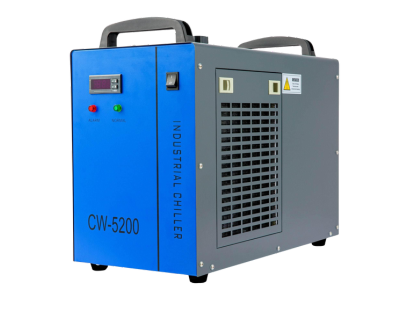
| Cooling Needed | Air-cooled (built-in fans). | Water chiller required. |
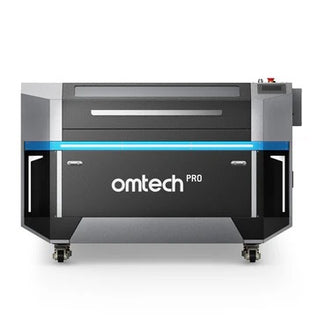
| Footprint | Highly compact, benchtop friendly. | Larger cabinet footprints. |
Because diodes operate at a visible light wavelength (~450nm), certain materials like clear acrylic are completely invisible to the beam—it passes straight through without marking it. It also struggles with highly reflective bare metals. CO₂, running at 10,600nm, absorbs beautifully into glass and plastics.
The Dual-Source Solution: Changing the Game
If you regularly work with a mixed inventory of timber and metal, you traditionally had to buy two entirely separate machines. However, dual-source engineering has changed that.
The OMTech Solis Duo 50W Fiber & 40W Diode Dual Laser Engraver solves this exact problem by packing two distinct laser sources into a single chassis. You can deploy the industrial-grade 50W fiber side for lightning-fast metal marking, and switch to the 40W diode side for your timber and leather jobs. For smaller workshops or lower-power requirements, the Solis Duo 30W Fiber & 20W Diode offers the exact same multi-source flexibility on a smaller scale.
Can a Diode Laser Engrave Metal?
It depends entirely on your definition of "engraving."
Bare Metal vs. Coated Metal: Bare, polished metals like stainless steel, raw aluminium, or brass reflect a diode's wavelength. The beam simply bounces off, leaving a faint, blurred mark or nothing at all.
Coated metals are a different story. If you are marking anodised aluminium cards, painted trophies, or powder-coated tumblers, a 20W+ diode performs incredibly well. It quickly vaporises the top coating to reveal the bright metal underneath.
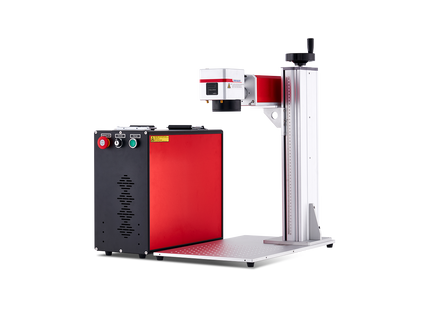
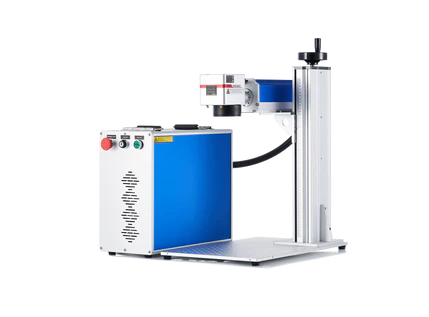
For serious, industrial metal engraving or deep jewellery marking, a Fiber laser is the only correct answer. If metal components represent a core part of your business revenue, relying on a diode will only lead to frustration.
20W vs. 40W Diode: Does the Wattage Gap Matter?
Yes, but it might not work the way you think. A 40W diode does not engrave twice as deep as a 20W machine. In laser processing, the relationship between raw wattage and engraving depth is non-linear.
What those extra watts actually buy you is production speed and cutting capability.
-
At 20W: You can slice through 3mm plywood in a single pass at a modest travel speed.
-
At 40W: You can run that same 3mm cut significantly faster, push through much thicker material, or maintain consistent cuts when hitting dense grain variations and knots in natural timber.
If you are purely engraving detailed photos or line-art logos, a 10W or 20W source is plenty—provided you calibrate your travel speeds correctly. High-resolution detail is driven by spot size and beam focus, not brute wattage. Step up to 40W if your daily workflow involves frequent cutting or processing dense hardwoods.
The Verdict: Affordable Diode Scaling in 2026
The price-to-capability ratio of diode lasers has fundamentally shifted. In 2026, you can secure a 20W optical output machine complete with autofocus, clean software integration (like LightBurn), and a generous workspace for a fraction of the cost of a mid-range CO₂ cabinet.
It represents a highly practical, low-risk entry point for Australian hobbyists looking to monetise a side-hustle, as well as a brilliant secondary machine for established commercial shops that want to offload smaller timber jobs from their primary industrial lasers.
When to Upgrade Beyond a Diode Setup
Know the physical limits of the machine before putting down your hard-earned money.
Move up to a dedicated CO₂ Laser if you:
-
Want to cut and design custom acrylic signs, cake toppers, or jewellery.
-
Plan to etch directly onto glassware, crystal, or stone mugs.
-
Need to cut through structural timbers thicker than 6mm on a daily basis.
Move up to a dedicated Fiber Laser if you:
-
Mark bare, polished, or raw metals (stainless steel, brass, copper).
-
Require permanent, high-speed serialization or asset tags for industrial clients.
-
Manufacture custom metal jewellery pieces.
If your business path aligns mostly with high-volume organic manufacturing, check out the OMTech CO₂ laser collection. If bare metal processing is your primary breadwinner, head straight over to our fiber laser machines.
Frequently Asked Questions
What is a diode laser engraver best used for?
Diodes excel at processing timber, leather, cork, cardboard, fabric, bamboo, and coated metals (like powder-coated travel mugs or anodised tags). They are completely unsuited for clear acrylic or bare, un-coated steel.
Diode vs. CO₂: Which one should I buy?
Go with CO₂ if your product line relies heavily on acrylics, glass etching, or rapid, thick timber cutting. Opt for a diode if you want a compact, budget-friendly setup primarily for wood and leathercraft. If you need to jump between metals and timber seamlessly, a dual-source machine like the Solis Duo bridges the gap.
Can a 20W diode laser mark metal?
Yes, provided the metal has a surface treatment like paint, powder coating, or anodisation. It will not cleanly engrave bare, polished metals—you will need a fiber laser for that level of material absorption.
How long does a diode laser head actually last?
Most high-quality diode laser sources are rated for roughly 10,000 hours of operational life. You can maximise this lifespan by keeping your power settings within sensible limits (avoiding running at 100% continuously) and keeping your cooling fans free of dust.